
Planetary cameras suit beginners who want more than an occasional eyepiece view and experienced observers chasing sharper lunar detail. The right camera can record thousands of frames during a brief period of steady air, giving stacking software better material to work with.
We compared 5 models from SVBONY and Celestron across sensor design, frame rate, connection type, software support, and telescope fit. Because specifications and availability can change, this guide uses September 2026 information and helps you separate useful imaging features from impressive sounding numbers.
Many shoppers choose by megapixel count alone, then discover that their computer, telescope focuser, or capture software creates the real limitation. If you are also organizing broader household buying research, the Uncategorized collection provides another useful starting point.


Best Planetary Cameras Buying Guide
1. Sensor Size and Pixel Design
The sensor determines how much light reaches the image and how finely the camera samples a planet through your telescope. Pixel size also influences image scale, exposure behavior, and whether a small target occupies enough pixels to reveal useful detail.
Small pixels can produce excellent planetary sampling with longer focal lengths, while larger pixels may perform better when light is limited. The SVBONY SC715C Telescope Planetary Camera uses 1.45 micrometer pixels, whereas the Celestron NexImage 20 Solar System Imager uses 1.4 micrometer pixels and a high resolution sensor.
A practical starting point is the critical sampling estimate of roughly five times pixel size in microns for focal ratio. For a 2 micrometer pixel, an f/10 system is close to a sensible baseline, although atmospheric steadiness matters more than any formula.
Do not automatically treat the largest resolution as the clearest result. A telescope may not resolve the extra pixels, and enormous files can slow capture, storage, and stacking without adding visible planetary structure.
2. Frame Rate and Region of Interest
Planets rotate, atmospheric turbulence changes quickly, and tracking is never perfectly still, so fast capture helps preserve brief moments of sharpness. Higher frame rates let you collect a larger sequence before rotation or guiding errors soften the final stack.
Look for the frame rate at the resolution you will actually use, not only the maximum advertised figure. The SVBONY SV305C Pro Telescope Camera records 1920 by 1080 video at up to 107 frames per second, making it particularly suited to rapid lunar and planetary sequences.
Region of interest, commonly called ROI, crops the active sensor area so the camera transfers fewer pixels. The Celestron NexImage 20 Solar System Imager includes ROI support, which can boost speed, reduce file size, and simplify processing around a compact planet.
Use the smallest ROI that comfortably contains the target and leaves room for tracking movement. If the planet drifts outside that box, the lost frames outweigh the speed advantage, so leave a modest safety margin.
3. Sensitivity, Noise, and Dynamic Range
Sensor sensitivity affects how short your exposures can be and how clean your frames look under imperfect conditions. Low read noise is valuable because it preserves faint structure without adding as much electronic grain to each image.
The SVBONY SV305C Pro Telescope Camera uses an IMX662 sensor and specifies very low readout noise, while the SVBONY SC311 Upgraded WiFi Telescope Camera,IMX662 also emphasizes low noise and no amp glow. These characteristics can help when recording dimmer targets or using shorter exposures.
Dynamic range matters when a target contains bright and darker areas, such as lunar terrain near shadow or Jupiter alongside bright cloud zones. HDR support can help retain tonal separation, but correct exposure and careful processing remain essential.
Compare sensor generation, pixel size, read noise, and real capture modes together. A highly sensitive sensor with an unsuitable frame rate may be less useful for planetary work than a balanced sensor that produces clean, fast video.
4. Telescope and Optical Compatibility
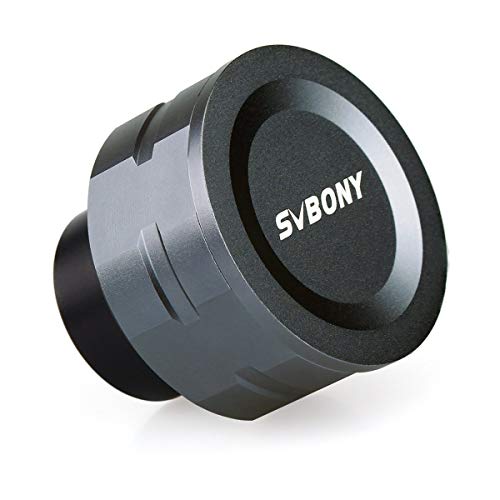
A camera is only useful when it physically connects to your telescope and reaches focus without awkward adapters. Most choices here use a standard 1.25 inch format, which fits many common telescope focusers and filter accessories.
Check whether your telescope needs an extension tube, a particular nosepiece, or additional back focus before ordering. Also confirm that the camera body does not collide with a mount, diagonal, or focusing mechanism during normal use.
The SVBONY SV105 Telescope Camera is designed for straightforward 1.25 inch use and supports filters through its threaded interface. That makes it a practical entry point for lunar and planetary video when your setup already uses standard accessories.
Focusing is usually performed through the telescope rather than inside the camera. The SVBONY SC715C Telescope Planetary Camera does not include built-in focus adjustment, so your telescope focuser must provide enough precision for the small planetary image.
5. Computer, Operating System, and Software Support
Capture software controls exposure, gain, white balance, frame rate, file format, and recording length. Before choosing a camera, verify that its software works with your computer and that the connection supports the intended resolution without instability.
The SVBONY SV105 Telescope Camera works with software options including SharpCap, AstroDMx Capture, and USB Camera depending on the operating system. It also supports Apple laptops, although the supplied information excludes Apple phones and tablets.
The SVBONY SV305C Pro Telescope Camera works with computers, including MacBook systems, but does not support iPad connection. The SC715C supports SharpCap, AstroDMx Capture, and NINA, while requiring dedicated software and a computer rather than a smartphone.
Choose the capture application before buying whenever possible. A camera with impressive hardware becomes frustrating if your preferred program cannot expose its controls, save the required format, or maintain the desired frame rate.
6. Connection Speed and Buffer Memory
Fast sensors generate substantial data, so the USB connection and internal buffer influence whether a recording remains smooth. A slow link can force lower frame rates, dropped frames, or compressed settings that reduce your stacking options.
USB 3.0 is preferable for high speed planetary capture, especially at full resolution or high frame rates. The SVBONY SV305C Pro Telescope Camera advertises USB 3.0 transfer and includes 128MB DDR buffering, while the SC715C provides USB 3.0 and a larger 512MB DDR3 cache.
Buffer memory temporarily holds frames when the computer cannot write every image immediately. It does not replace a fast computer or cable, but it can reduce interruptions during sustained recordings and protect more usable frames.
Use a short, reliable USB cable and connect directly to the computer rather than through an overloaded hub. After setup, check the captured frame count against the expected duration to detect dropped frames before an important imaging session.
7. Power, WiFi, and Field Convenience
Most astronomy cameras depend on a computer, but a self powered or WiFi enabled model can simplify field operation. Convenience matters when you observe away from outlets, move between targets, or want to view images without running a long cable indoors.
The SVBONY SC311 Upgraded WiFi Telescope Camera creates a 2.4G hotspot for direct phone or tablet connection through the SvbonyAstroCam application. Its internal battery is designed for extended sessions, and its storage can be expanded beyond the included card.
WiFi is not automatically better for high speed planetary imaging because wireless transfer and application limitations may affect workflow. It is more attractive for electronic assisted observing, previews, scheduled captures, and sharing than for the fastest computer based stacking.
Confirm the application name for the exact camera generation because older and upgraded versions may use different software. Bring a charged battery, spare storage, and a stable mounting arrangement when working outdoors.
8. File Formats and Processing Workflow
Planetary imaging usually benefits from recording video, selecting sharp frames, and stacking them into a final image. Raw or FITS support can preserve more processing flexibility, but it may require more storage and a more deliberate workflow.
The SC311 supports photo shooting, video recording, RAW or FITS saving, and scheduled shooting, giving it broader capture flexibility. For conventional planetary work, however, a stable high frame rate and compatible stacking program may matter more than still image options.
Plan storage before recording long sequences at high resolution. A useful rule is to capture several short videos rather than one enormous file, because shorter clips simplify sorting and reduce the risk of losing an entire session.
Keep the original recordings and create processed copies separately. This lets you revisit alignment, sharpening, and stacking decisions when better software or a more suitable processing approach becomes available.
9. Guiding Features and Mount Integration
Planetary cameras do not always need guiding, but autoguiding support can expand what your equipment does later. A guiding interface allows the camera to help correct mount drift during other types of astronomical imaging.
The SVBONY SV305C Pro Telescope Camera and SVBONY SC715C Telescope Planetary Camera include ST4 guiding interfaces. The Celestron NexImage 20 Solar System Imager also supports built in autoguiding use with a guidescope.
Guiding support should not outrank frame rate, sensor performance, or software compatibility if planets are your only target. It becomes more valuable when you expect to add deep sky imaging or want one camera to serve several roles.
Check compatibility with your mount, guiding software, and cable layout before relying on this feature. A connector alone does not guarantee that every control program will recognize the camera without configuration.
| What to compare | Why it matters | Practical priority |
|---|---|---|
| Sensor and pixels | Controls sampling, sensitivity, and image scale | High for detail and exposure control |
| Frame rate and ROI | Preserves brief moments of steady seeing | Very high for planets |
| USB and buffer | Reduces dropped frames during recording | High for computer workflows |
| Software support | Determines whether controls and files work properly | Essential before purchase |
| WiFi and battery | Improves portable viewing and field convenience | Situational |
| ST4 guiding | Adds future mount and deep sky flexibility | Useful for expanding systems |
Why You Should Trust Us
We built this comparison from the supplied product specifications, stated sensor technologies, connection standards, software compatibility, storage features, and intended astronomy applications. We prioritized information that changes setup decisions rather than repeating marketing language without explaining its practical effect.
Our shortlist covers entry level USB operation, high speed computer capture, WiFi assisted observing, and higher resolution solar system imaging. We compared the models across distinct use cases so a beginner does not receive the same recommendation as an experienced observer seeking faster acquisition.
We do not claim physical testing, laboratory measurements, or independent image quality results that the available data cannot support. Instead, we identify verified features, explain their likely workflow impact, and encourage readers to confirm current compatibility before purchase.
Because camera software, prices, stock, and firmware can change, our editorial framework remains focused on durable buying criteria. Product listings and dynamic site information can be refreshed separately while the comparison logic continues to help readers evaluate new alternatives.
Final Thoughts
Our best overall choice is the Celestron NexImage 20 Solar System Imager for shoppers who want a purpose built solar system camera with high resolution, ROI, USB-C connectivity, included capture software, and guiding support. It offers a particularly complete feature set for lunar, planetary, and filtered solar imaging.
Our best value choice is the SVBONY SV105 Telescope Camera for beginners who need uncomplicated lunar and planetary video. Its 1.25 inch format, plug and play approach, broad computer software options, and straightforward recording purpose keep the learning curve manageable.
For fast computer based planetary capture, we like the SVBONY SV305C Pro Telescope Camera. Its IMX662 sensor, high frame rate at 1080p, USB 3.0 transfer, HDR support, buffer memory, and ST4 interface make it a strong fit for moving targets and expanding setups.
Choose the SVBONY SC311 Upgraded WiFi Telescope Camera,IMX662 when portable electronic assisted observing and direct mobile access matter most. The SVBONY SC715C Telescope Planetary Camera is another compelling specialist option for detailed high resolution capture, provided your computer and telescope focuser suit its requirements.
For more buying guidance beyond astronomy equipment, browse our Home and Living category or compare related technology and household recommendations throughout the site. The right choice ultimately depends on your telescope, computer, observing conditions, and willingness to process video.
FAQs
What is the top rated option among Best Planetary Cameras in 2026?
The supplied options include several highly rated models, but rating alone does not determine imaging performance. Match the camera to your telescope, computer, target size, and preferred capture workflow before making the final decision.
Can a planetary camera photograph the Moon?
Yes, planetary cameras are well suited to lunar photography because the Moon is bright and provides many high contrast features. Short videos can be stacked to improve detail, while a larger field of view can help frame broader lunar scenes.
Can these cameras capture Saturn and Jupiter?
Yes, compatible telescopes can use these cameras to record Jupiter, Saturn, Mars, and other bright solar system targets. Atmospheric steadiness, precise focus, tracking, and careful exposure generally matter more than simply selecting the highest resolution.
Do I need a tracking mount for planetary imaging?
A tracking mount makes longer sequences easier because the target remains near the sensor center. Manual mounts can work for bright targets, but frequent adjustments make high frame rate recording and consistent framing more difficult.
What computer is needed for a telescope camera?
You need a computer capable of running the camera software, receiving the selected USB data rate, and storing video reliably. A modern system with adequate storage and a direct USB connection is preferable for high speed capture.
Are planetary cameras compatible with smartphones?
Compatibility varies substantially between models. The SC311 is designed for direct WiFi connection to a phone or tablet through its specified application, while the SV305C Pro and SC715C require computer based operation.
Is a larger megapixel count always better?
No, because telescope resolution, seeing conditions, frame rate, and pixel size determine how much useful detail reaches the final image. Extra pixels can also create larger files and slower transfers without improving visible sharpness.
What does ROI mean on an astronomy camera?
ROI means region of interest, a selectable portion of the sensor used for recording. Cropping around a planet reduces data volume and can increase frame rate, although the crop must leave enough room for tracking movement.
Should beginners choose color or monochrome imaging?
Color cameras are usually easier because they capture a finished color sequence without requiring separate filters and aligned recordings. Monochrome systems can offer specialized flexibility, but they demand more equipment, processing time, and technical planning.
What software can process planetary camera videos?
Capture applications listed for these models include SharpCap, AstroDMx Capture, NINA, USB Camera, and Celestron iCap. Stacking and sharpening software may be separate, so confirm file compatibility and operating system support before beginning.