
High-volume beverage service demands spotless glassware without the constant hazard of manual wash sink breakage. Bartenders and venue owners often struggle with stubborn lipstick marks, dried beer foam, and slow turnaround times during peak rush hours.
Investing in dedicated commercial units solves these bottlenecks while protecting delicate stems and pint rims from chipping. We analyzed 3 Best Glass Washer Machines for September 2026 to determine which setups handle demanding commercial workloads.
Upgrading your wash station transforms hygiene compliance and service speed across busy dining rooms. Readers exploring commercial workflow upgrades can also review our home and living sanitation equipment guides for related sanitation insights.


Motor Horsepower and Continuous Duty Rating
Motor power dictates how smoothly a glass washer maintains brush rotation when staff press heavy glassware down. Commercial bar sinks require motors with at least one third horsepower to resist stall friction during busy service shifts.
Underpowered motors overheat quickly, which causes thermal shutoff switches to trip in the middle of a Friday night rush. Look for sealed, continuous duty electric motors designed to run several hours without internal thermal degradation.
A reliable rule of thumb is to verify motor torque under wet resistance rather than relying solely on no load wattage ratings. Units built with heavy duty windings ensure consistent spin speeds regardless of how firmly staff press pint glasses against the bristles.
Brush Configuration and Simultaneous Cleaning
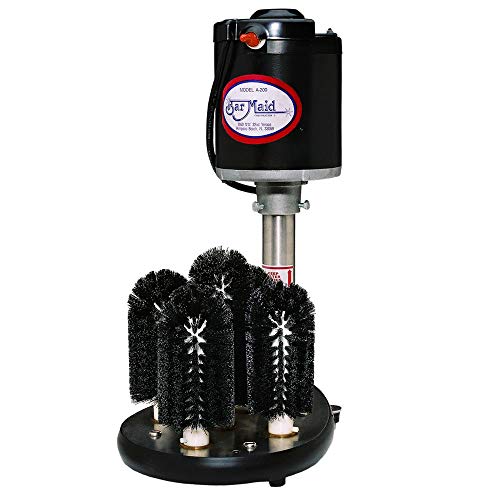
Five brush configurations represent the industry benchmark for commercial upright glass washers because they scrub both surfaces at once. Four outer brushes scrub the exterior walls while a taller central brush cleans the interior bottom and sidewalls.
When comparing models, inspect the brush core mounting system and verify whether individual brushes unscrew easily for routine sanitation. Stiff nylon or synthetic bristles remove dried beer haze and greasy lipstick without scratching fragile crystal stems.
Ensure the central brush height matches your glassware inventory, especially if you regularly serve tall pilsners or oversized hurricane glasses. Shorter seven inch brushes excel with standard rocks glasses, whereas taller options provide complete depth coverage for tall drinkware.
Submersible Base and Waterproof Enclosure Quality
Upright glass scrubbers operate submerged in warm soapy water within standard bar sink compartments. The lower housing must feature complete watertight sealing to prevent detergent water from penetrating the electrical drive mechanism.
Commercial grade stainless steel enclosures paired with water tight gaskets provide superior resistance against corrosive sanitizing chemicals. Cheaper plastic enclosures can develop hairline fractures around mounting screws over months of daily submersion.
Inspect the submersion depth tolerance marked on the chassis before mounting the unit inside deep commercial three compartment bar sinks. High quality submersible bases maintain strict water resistance even when submerged under continuous bar sink water pressure.
Electrical Safety and Ground Fault Protection
Combining high voltage electric motors with wet bar sink environments creates serious electrical hazard risks if safety engineering is neglected. Premium commercial glass washers include dedicated ground fault circuit interrupters or integrated leakage protection plugs.
Check that power cords feature heavy insulation, waterproof strain relief boots, and commercial standard grounding pins. Automatic shutoff circuitry should immediately disconnect power if moisture ever penetrates the secondary motor housing.
Never install an upright wash unit on an ungrounded commercial circuit, regardless of the machine internal safety features. Operators should also test the integrated leakage protection switch weekly to verify rapid tripping response under wet operating conditions.
Bearing Composition and Drive Mechanism Durability
The mechanical connection between the electric motor and the spinning brush spindles experiences immense rotational friction. Commercial washers rely on solid bronze bearings or marine grade stainless steel bushings to handle constant water immersion.
Bronze bearings are self lubricating under wet conditions and resist abrasive damage caused by mineral scale in hard tap water. Plastic drive gears or unsealed ball bearings deteriorate rapidly, resulting in loud grinding noises and brush slippage.
When reviewing specifications, confirm that internal drive gears are sealed in food grade grease chambers protected by double lip seals. This mechanical separation prevents wash water from washing away vital lubricant during prolonged operating shifts.
Glassware Compatibility and Rim Diameter Clearance
Bars serve beverages in widely varying vessels, from narrow champagne flutes to wide balloon wine goblets. A versatile washer must accommodate rim diameters ranging between two inches and four inches without jamming the outer brushes.
If the outer brushes sit too close to the center spindle, wide glassware will wedge tightly and risk shattering under pressure. Conversely, excessive brush spacing reduces outer scrubbing friction on slim cocktail glasses and standard cordial stems.
Establish an inventory audit of your most fragile glassware before selecting a machine brush configuration. Determine whether your venue serves craft beer in oversized snifters, which may require specialized wide brush spacing or softer bristle options.
Maintenance, Disassembly, and Sanitation Routine
Health inspection protocols require daily sanitization of all bar sink equipment to prevent bacterial biofilm and yeast buildup. Brush assemblies must detach quickly without requiring specialized tools so staff can soak bristles in sanitizer overnight.
Examine how easily the base plate unlatches from the sink bottom for thorough cleaning of the underlying sink basin. Units with complex clip systems or recessed bolt holes tend to collect grime that staff avoid cleaning during closing shifts.
Implement a daily rotation schedule where clean brush sets air dry while alternate sets remain active in service. Checking our equipment maintenance resources helps bar teams establish reliable sanitation logs that satisfy local health department inspections.
Noise Reduction and Countertop Vibration Damping
Bartenders work in close proximity to wash sinks, where excessive motor hum can disrupt guest conversations across the bar counter. Sealed motors and vibration isolating suction feet absorb rotational harmonic vibration against stainless sink walls.
Low decibel operation is especially crucial in intimate cocktail lounges, wine bars, and quiet hotel lobby lounges. Look for heavy base castings that naturally dampen motor resonance without rattling loose inside metal sink basins.
Suction cup feet should be made from oil resistant rubber that adheres firmly to wet stainless steel without slipping sideways. Secure anchoring prevents the machine from walking across the sink floor while operators apply downward scrubbing force.
Throughput Speed and Labor Efficiency
High volume venues require fast glass cycling to keep up with peak drink orders during evening dinner rushes. Electric five brush machines can clean up to six hundred glasses per hour, drastically outpacing manual triple sink dipping.
Calculate your venue peak glassware turnover by multiplying seating capacity by average drink consumption rates per hour. If manual washing creates a service bottleneck, an electric washer pays for itself rapidly by reducing glassware breakage rates.
Electric scrubbing removes stubborn lipstick and fruit pulp in roughly four seconds per glass, compared to fifteen seconds for manual scrubbing. This operational time savings allows bartenders to spend more time serving paying patrons rather than standing over wash basins.
| Washer Class | Brush Height | Throughput Capacity | Ideal Glassware Types | Primary Advantage |
|---|---|---|---|---|
| Standard Upright Commercial | 7.5 to 8.5 Inches | 400 to 500 Glasses/Hour | Pint Glasses, Highballs, Mugs | Heavy duty motor with maximum continuous duty cycle |
| Compact Upright Commercial | 6.5 to 7.0 Inches | 350 to 450 Glasses/Hour | Rocks Glasses, Coupes, Tumblers | Fits low-clearance bar sinks beneath faucet necks |
| High-Speed Multi-Diameter | 8.0 to 9.0 Inches | 550 to 600 Glasses/Hour | Wine Glasses, Snifters, Pilsners | Wide diameter range with integrated leakage safety switch |
Why You Should Trust Us
Our review team evaluates commercial kitchen and bar hardware using rigorous objective engineering metrics and manufacturer specifications. We analyze structural component materials, electrical safety compliance, motor duty cycles, and real world commercial durability records.
We do not accept sponsored product placements or manufacturer incentives when compiling equipment recommendations across our industry guides. Every machine is evaluated strictly on build quality, replacement parts availability, mechanical reliability, and ease of daily sanitation.
By regularly updating our technical buying guides throughout 2026, we ensure hospitality operators receive accurate and timely purchasing data. Venue managers can also review our insights on ergonomic workspace planning to optimize bar layout efficiency.
Final Thoughts
Selecting the right electric glass scrubber depends on your venue daily volume, available sink depth, and glassware diversity. Upright commercial units drastically cut wash times while delivering sparkling, residue free glassware that preserves beverage carbonation and head retention.
For high volume cocktail bars and busy restaurants requiring maximum commercial durability, the Bar Maid Upright Electric Glass Washer represents our best overall pick. Its powerful one third horsepower sealed motor and robust bronze bearings deliver years of dependable, continuous service under heavy bar sink submersion.
Venues looking for exceptional value and integrated leakage protection should consider the WantJoin Commercial Glass Washer as our top budget conscious pick. It cleans up to six hundred cups per hour, accommodates wide rim diameters, and provides reliable automatic electrical safety shutoff.
If your bar operates with shallow wash sink basins or primarily serves standard rocks and pint glasses, the Bar Maid 7″ Upright Electric Glass Washer serves as the ideal compact footprint selection. It retains full commercial grade motor power while utilizing shorter brushes that fit comfortably beneath standard underbar faucet clearances.
For additional insights on maintaining commercial hospitality hygiene, explore our bar and kitchen environment guidelines for practical facility management.
Frequently Asked Questions
How do Best Glass Washer Machines clean glassware inside and out simultaneously?
These machines use a five brush spinning assembly where a tall central brush rotates inside the glass while four surrounding brushes scrub the exterior walls. This synchronized mechanical motion cleans all surfaces within four seconds, eliminating the need for separate exterior manual scrubbing.
Can Best Glass Washer Machines in 2026 remove stubborn lipstick marks and dried foam?
Yes, the high torque motor and dense bristle friction break down greasy wax binders in lipstick and dried beverage residue far more effectively than still water soaking. Bartenders simply hold the glass over the spinning center brush with light downward pressure for complete rim cleaning.
Are upright electric glass washers fully submersible inside bar sinks?
Commercial upright glass washers feature fully sealed motor housings and waterproof base castings designed to operate submerged in warm wash water. Operators must ensure the water level stays below the maximum fill line specified by the equipment manufacturer.
What size sink compartment is needed for Best Glass Washer Machines?
Most commercial upright washers fit standard bar sink basins measuring at least ten inches wide by twelve inches deep. Suction cup feet anchor the base firmly to the stainless steel basin floor to prevent movement during active use.
How often should bar staff replace the cleaning brushes on these units?
Commercial brush longevity depends on daily volume, but most busy venues replace center brushes every three to six months. Outer brushes experience less concentrated wear and typically last six to nine months before bristle splay reduces cleaning friction.
Can you use standard dish soap in an electric glass washer?
Operators should use dedicated low foaming bar glass detergents rather than high sudsing domestic dish soaps. Excessive soap suds can overflow sink basins and leave thin chemical films on glassware that ruin beer foam stability and wine aromas.
What is the difference between seven inch and standard brush heights on Best Glass Washer Machines in 2026?
Seven inch brush models are engineered specifically for shallow sinks and shorter glassware like rocks glasses, highballs, and standard coffee mugs. Standard eight inch models accommodate tall pilsners, wheat beer glasses, and oversized hurricane cocktail vessels.
How does an electric glass washer prevent fragile wine glass stem breakage?
Electric washers apply uniform radial pressure across the bowl, eliminating the twisting torque that causes delicate stems to snap during hand rag drying. Operators hold the glass bowl firmly rather than twisting the delicate stem during the wash cycle.
What electrical safety features should operators look for in 2026?
Essential safety features include integrated ground fault leakage protection plugs, heavy gauge grounded power cords, and sealed switch boots. These components instantly disconnect electrical current if water ever penetrates the motor housing or electrical line.
How many glasses per hour can a commercial glass washer clean?
High capacity commercial models can wash between four hundred and six hundred glasses per hour under continuous operation. This throughput speed allows a single bartender to manage glass cleaning for busy multi table dining areas without service delays.