
High-volume bakeries, busy restaurants, and artisan catering services rely on relentless mixing power to maintain daily operations. Standard countertop appliances quickly overheat when processing dense dough batches or continuous cake batter. Professional kitchens need dedicated machines built with reinforced metal housings and high-torque motors.
Investing in the Best Commercial Stand Mixers ensures steady ingredient aeration, uniform dough development, and reduced labor across long shifts. Our updated September 2026 evaluation compares 10 leading heavy-duty machines from top brands like KitchenAid, Waring Commercial, ZACME and more to help you make an informed purchase. Choosing the right appliance directly improves batch consistency while lowering maintenance downtime.
Finding the ideal unit requires balancing bowl capacity, transmission torque, electrical requirements, and operator safety guards. Explore our comprehensive home and commercial culinary resources to understand how modern kitchen machinery elevates workflow efficiency. The following comparison highlights the top commercial equipment available for your business.





Selecting industrial food prep equipment involves understanding mechanical stress, kitchen dimensions, and production targets. This guide explores the nine most vital technical considerations before you add high-capacity equipment to your production line.
Bowl Capacity and Batch Yield
Bowl size determines how much product your kitchen can prepare in a single run without overloading the mixing arms. Commercial units generally scale from compact 7-quart countertop models up to 30-quart floor units capable of handling over 20 pounds of dense dough. Selecting an inadequate capacity forces staff into repetitive mixing cycles that slow down daily prep.
To calculate your required volume, evaluate your largest recipe yield alongside your flour hydration ratios. A 30-quart bowl easily accommodates high-volume bakery bread batches, whereas an 8-quart unit suits delicate pastry creams, small icings, and boutique cafe recipes. Knowing your peak production requirements prevents costly workflow bottlenecks during busy morning rushes.
Avoid purchasing a bowl that matches only your current maximum batch size. Leaving a twenty percent volume buffer prevents liquid splatters, overflow during rapid expansion, and excess motor strain during initial dry ingredient incorporation. Proper headroom ensures smooth planetary rotation and even ingredient distribution throughout the bowl.
Multi-station prep rooms often benefit from maintaining dual bowl sizes for versatile recipe development. Exploring general hospitality equipment guides provides further context on balancing kitchen workstation layout with total hourly output. Matching capacity to menu demand creates a balanced culinary workflow.
Motor Horsepower and Transmission Type
Motor strength dictates how effectively an appliance kneads thick hydration recipes without stalling or suffering thermal breakdown. Commercial machines utilize heavy-duty direct current or induction motors ranging from 350 watts up to 1250 watts of continuous output. Robust wattage ensures steady planetary action even when tackling dense sourdough or stiff pasta dough.
Gear-driven transmissions provide constant torque across all speeds, making them ideal for heavy pizza dough and stiff cookie mixes. Belt-driven models offer smoother, quieter operation but may slip when facing exceptionally tough, low-hydration mixtures. Understanding this mechanical distinction helps you choose the correct drive mechanism for your menu.
Rule of thumb indicates choosing gear-driven systems if your primary menu features artisan bread, bagels, or whole-grain items. The mechanical gears ensure constant rotational momentum without losing speed under peak dough resistance. For lighter pastry tasks and meringues, high-efficiency DC motors offer exceptional control with minimal heat generation.
Always look for thermal overload protection circuits built into high-torque commercial motors. These safety sensors shut off power before extreme friction or extended run cycles can scorch internal copper windings. Built-in motor safeguards protect your capital investment against operator errors during demanding shifts.
Speed Settings and Variable Control
Precise speed control allows bakers to tailor rotational speed to specific culinary tasks, from folding flour to whipping egg whites. Most industrial planetary mixers feature three dedicated gear speeds, while refined countertop commercial units offer up to eleven variable levels. Selecting the proper speed protects ingredient structure and prevents motor strain.
Low speeds near 100 RPM provide gentle kneading torque without splashing flour clouds across the workspace. Medium speeds around 170 to 190 RPM incorporate fillings smoothly, while high speeds exceeding 340 RPM aerate whipped frostings rapidly. Using targeted speeds ensures optimal gluten development and texture consistency.
Always check whether the unit requires complete stoppage before shifting gear speeds on multi-speed transmissions. Changing gears on active mechanical transmissions can strip internal metal teeth and lead to costly gear box replacements. Proper operator training on speed transitions ensures long equipment longevity.
Digital displays and knob-style selectors offer distinct operational advantages depending on your staff workflow. Rotary switches provide tactile feedback during messy prep, whereas digital panels provide precise cycle repeat accuracy. Choose controls that match the technical comfort of your kitchen personnel.
Safety Guards and Interlock Mechanisms
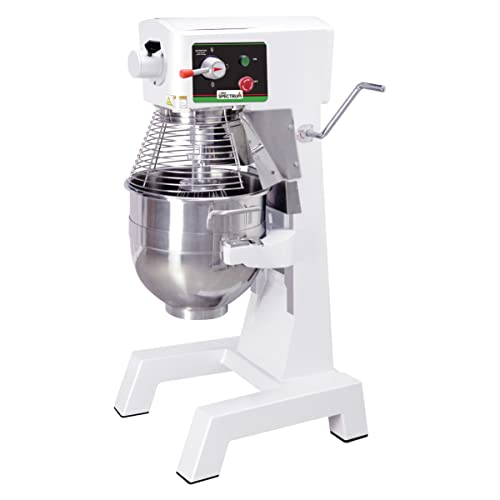
Commercial kitchen machinery must meet strict occupational safety guidelines to protect operators during active mixing cycles. Heavy wire safety guards surround the bowl opening to keep fingers, spatulas, and foreign objects out of the planetary pathway. These guards are mandatory in commercial foodservice environments to prevent workplace accidents.
Integrated microswitch interlocks immediately stop motor rotation whenever the wire cage opens or the bowl lowers. This fail-safe prevents traumatic hand injuries when staff members add ingredients or check mixture consistency. Reliable safety interlocks minimize liability risks in fast-paced commercial kitchens.
Many commercial guards include integrated ingredient chutes that let you feed flour and liquids safely during operation. This feature eliminates unnecessary stops, keeping your prep line efficient while preserving complete operator safety. Chutes also reduce airborne flour dust in open kitchen layouts.
Selecting equipment that complies with recognized commercial standards reduces workplace liability and ensures compliance with local health inspections. Always verify that interlock switches are constructed from durable, sealed components that resist flour dust penetration. Rugged safety components deliver reliable protection year after year.
Construction Quality and Housing Materials
Heavy-duty construction ensures the mixer remains stable on counters or floors without vibrating during intense kneading. Reinforced die-cast iron and heavy cast aluminum housings absorb mechanical vibrations that lighter consumer appliances cannot withstand. Sturdy structural weight prevents walking across prep surfaces during high-speed operation.
Weight is a major advantage in commercial food preparation environments where heavy dough balls create violent rocking motions. Units weighing between 40 and 180 pounds stay firmly anchored without requiring permanent countertop bolt installations. A solid foundation protects internal alignment under heavy cyclical loads.
All food contact parts must feature international food-grade stainless steel to resist acid corrosion, rust, and repeated sanitation cycles. Stainless steel attachments withstand dishwasher sanitizing cycles without pitting, chipping, or releasing metallic oxidation into food products. Food safety compliance hinges on high-grade non-reactive bowl metallurgy.
Durable cast metal housings also dampen motor noise significantly during busy production hours. A rigid machine body prevents chassis flex, keeping drive shafts aligned and extending the service life of internal bearings. Premium construction materials directly translate into decades of dependable kitchen service.
Integrated Digital Timers and Automation
Consistency in commercial baking relies on exact mix durations to develop gluten structures without overworking the dough. Integrated digital timers allow operators to set cycles between 30 and 60 minutes for hands-free, automated batch production. Automated timing eliminates guesswork and standardizes recipe results across different kitchen shifts.
Timers equipped with audible end-of-cycle alerts notify prep cooks across noisy kitchens when a mix completes. This automation frees staff members to scale future ingredients or attend to oven stations without hovering by the mixer. Multi-tasking capability boosts overall kitchen productivity and labor efficiency.
When evaluating timer controls, verify whether the system retains previous run settings for repeat recipe execution. Digital countdown screens help kitchen teams standardize product texture across rotating shifts and varying operator skill levels. Precise time control is vital for sensitive pastry emulsions and bread doughs.
Automated shut-off features also guard against accidental motor burnout if staff members get called away during a cycle. Pairing precision timing with quality mixing ensures every batch matches your strict culinary standards. Reliable timers protect both product texture and motor health.
Bowl Lift Mechanisms and Ergonomics
Accessing heavy ingredients requires a dependable mechanism to raise and lower the mixing bowl smoothly. Commercial machines utilize either rotating wheel lifts, manual lever systems, or ergonomic tilt-back motor heads. Choosing the right lifting design depends on your available vertical space and batch weights.
Floor-standing and high-capacity tabletop mixers rely exclusively on bowl-lift designs to maintain absolute chassis rigidity. Lever-operated lifts offer rapid height adjustment, while wheel-driven screws give fine mechanical leverage when lifting heavy 30-quart loads. Rigid bowl arms hold full containers securely against beater forces.
Tilt-head designs are common on compact 7-quart to 8.4-quart models, providing unobstructed bowl access for rapid tool changes. However, bowl-lift frames provide superior structural rigidity when processing thick, dense artisan sourdough starters. Consider your kitchen ceiling clearance before installing tall tilt-head models.
Consider the physical comfort of your kitchen crew who will be loading and unloading heavy dough batches daily. Smooth-action lift levers reduce repetitive strain and minimize the risk of accidental bowl drops or kitchen spills. Ergonomic designs protect staff well-being throughout demanding preparation shifts.
Attachment Versatility and Hub Compatibility
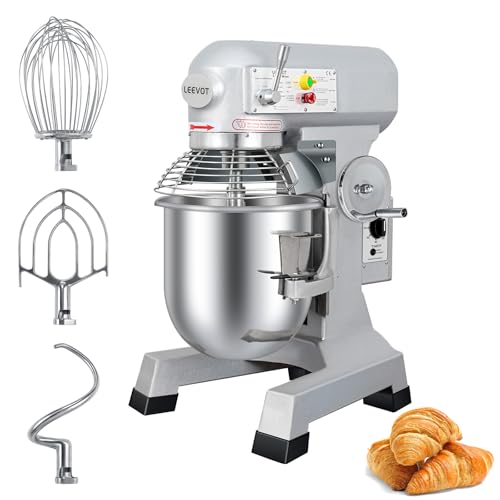
A complete commercial mixer should include specialized attachments to handle diverse menu items from breakfast through dinner. The standard trio includes a spiral dough hook, a flat beater paddle, and an elliptical wire whip. Having dedicated tools ensures optimal aeration, folding, and blending for every culinary task.
Spiral dough hooks pull and fold heavy dough downward, simulating traditional hand kneading without tearing gluten strands. Flat beaters excel at creaming butter, mashing dense root vegetables, and blending meat fillings for savory pies. Selecting the correct attachment prevents unnecessary motor resistance.
Elliptical wire whips incorporate air into egg whites, sponge batters, and rich buttercreams for maximum fluffiness. Some commercial machines also include a universal number twelve power hub to run meat grinders, vegetable slicers, and pasta rollers. Multi-purpose attachment hubs expand your culinary capabilities without requiring separate motorized appliances.
Verifying attachment material is crucial because solid stainless steel beaters outlast coated aluminum alternatives under heavy scraping pressure. Robust stainless tools withstand accidental drops onto commercial tile floors without cracking or bending. High-quality attachments maintain hygiene standards across years of intensive usage.
Electrical Requirements and Space Planning
Commercial food preparation appliances demand careful electrical and spatial planning prior to delivery. Countertop models generally run on standard 120V circuits with standard NEMA plugs, while large industrial units may require dedicated high-amperage breakers. Verifying electrical compatibility prevents tripped circuit breakers during peak operating hours.
Measure your kitchen counter depth, overhead cabinet clearance, and floor footprint before choosing between countertop and floor-standing models. High-capacity 30-quart mixers need ample clearance around the bowl arms for safe loading and cleaning routines. Adequate spatial layout ensures comfortable operator access and swift cleaning.
Keep adequate space around motor cooling vents to prevent ambient heat buildup in warm commercial bakery environments. Proper airflow preserves internal insulation, keeping the mixer operating at peak torque through back-to-back prep cycles. Good ventilation maintains optimal motor efficiency in hot kitchen conditions.
Integrating heavy machinery into small spaces requires planning smooth foot traffic paths around active workstations. Much like selecting dependable adult mobility gear for efficient transit, smart kitchen layout planning optimizes daily movement and overall productivity. Strategic equipment placement prevents kitchen congestion.
| Mixer Category | Capacity Range | Typical Wattage | Drive Mechanism | Ideal Kitchen Application |
|---|---|---|---|---|
| Compact Commercial | 7 to 8.4 Quarts | 350W – 800W | Direct Drive / Belt | Pastry Shops, Small Cafes, Sauce Prep |
| Mid-Size Countertop | 10 Liters / 10 Quarts | 450W – 1000W | Gear-Driven Transmission | Boutique Bakeries, Delis, Small Pizzerias |
| Heavy Floor-Standing | 30 Quarts / 30 Liters | 1100W – 1250W | Heavy High-Torque Gear | High-Volume Bread Bakeries, Hotels, Pizzerias |
Why You Should Trust Us
Our commercial culinary research focuses on objective engineering standards, motor durability, and real-world kitchen reliability. We thoroughly evaluate manufacturer technical schematics, safety certifications, transmission builds, and material specifications across all featured units. Our detailed reviews help foodservice professionals select dependable equipment without commercial bias.
We analyze real commercial performance data, factoring in dough hydration capacities, noise levels, and maintenance requirements. Our team continuously verifies feature updates to ensure this buying guide delivers accurate, practical recommendations for professional kitchen operators. We focus on verifiable engineering facts rather than promotional claims.
We maintain strict editorial independence and focus on clear, transparent data to help you invest with confidence. Every mixer shortlisted in this guide represents a balance of high-torque capability, food-safe manufacturing, and long-term operating value. Our objective evaluations give your business the clarity needed for major equipment purchases.
Final Thoughts
Equipping your bakery or restaurant with the right commercial mixer transforms daily preparation speed and ensures consistent product quality. Choosing a unit tailored to your specific batch sizes prevents costly motor burnout and optimizes labor efficiency across every shift. High-capacity culinary equipment establishes reliable throughput during demanding operating hours.
For large commercial bakeries demanding maximum throughput, the Winco 30 L Commercial-Grade Planetary Mixer stands out as our best overall recommendation thanks to its cast iron housing and high-torque gear transmission. If you need exceptional value in a high-capacity floor mixer, the BOSBAK Commercial Food Mixer 30Qt delivers robust 1250-watt power and digital safety controls at an accessible tier. Both units provide the heavy kneading power essential for high-volume dough output.
Kitchens seeking a versatile countertop powerhouse for delicate pastries and daily prep will appreciate the KitchenAid Commercial Series 8 Quart Bowl-Lift with its certified bowl guard and DC motor efficiency. Matching your daily menu volume with appropriate motor wattage ensures smooth kitchen workflow. Tailoring equipment to your exact prep volume prevents unnecessary energy use and workspace clutter.
Explore our comprehensive guides across commercial workspace comfort to create an ergonomic, productive kitchen environment. Selecting the right equipment today establishes a solid foundation for your culinary business growth. Invest in durable mixing power to elevate your food quality and kitchen efficiency.
Frequently Asked Questions
What is the top-rated option among Best Commercial Stand Mixers in 2026?
The top-rated model depends on your daily production scale and batch weight requirements. High-capacity bakeries favor 30-quart gear-driven floor mixers for relentless dough kneading, while boutique cafes and pastry kitchens prioritize NSF-certified 8-quart countertop units for versatile recipe prep.
How does a planetary mixer differ from a spiral dough mixer?
Planetary mixers rotate an offset attachment around an offset axis within a stationary bowl, making them versatile for whipping creams, mashing vegetables, and mixing batters. Spiral mixers rotate both the bowl and a fixed spiral hook simultaneously, optimizing them exclusively for heavy bread and pizza dough production.
What bowl capacity do I need for a small commercial bakery?
Small commercial bakeries typically require a 10-quart to 20-quart mixer to manage daily artisan bread batches and cake batters efficiently. If your bakery specializes primarily in multiple large dough batches every morning, investing in a 30-quart floor unit prevents bottle-necking your production schedule.
Can I run a commercial stand mixer on a standard 120V household outlet?
Many compact and mid-size commercial stand mixers up to 30 quarts operate on standard 120V electrical circuits with standard commercial plugs. However, it is essential to verify the dedicated amperage rating on your kitchen breaker to ensure continuous motor draw does not cause circuit trips.
Why are gear-driven mixers preferred for bread and pizza dough?
Gear-driven transmissions deliver positive mechanical engagement that maintains constant torque without slipping under extreme dough resistance. This rigid transfer of mechanical energy ensures thorough gluten development when processing low-hydration pizza bases and dense rye breads.
How often should planetary mixer transmission gears be lubricated?
Most commercial planetary mixers feature factory-sealed, permanently lubricated transmissions that require minimal routine maintenance under standard operating loads. However, intensive commercial operations should schedule annual professional inspections to check grease seals, bearing wear, and gear alignment.
What is the purpose of the safety guard on a commercial mixer?
Safety guards enclose the top of the bowl to prevent accidental contact between rotating planetary attachments and operator hands or utensils. Connected microswitch interlocks immediately cut power to the motor if the guard opens, ensuring full compliance with occupational health and safety standards.
Can commercial stand mixer attachments be washed in a commercial dishwasher?
Solid stainless steel attachments and mixing bowls can be safely washed and sanitized in high-temperature commercial dishwashers. Coated or aluminum attachments should be hand-washed to avoid surface pitting, chemical discoloration, or protective coating degradation from harsh detergents.
How does an integrated digital timer improve commercial kitchen consistency?
Digital timers allow prep cooks to program exact mixing durations, preventing batch overworking and ensuring uniform dough hydration across rotating shifts. Automated shut-off controls free staff members to multitask across prep stations without risking burned motors or ruined recipes.
What does NSF certification mean for commercial stand mixers?
NSF certification confirms that a mixer complies with strict public health, food safety, and sanitation standards. NSF-listed equipment features smooth, cleanable surfaces, non-toxic food-contact metals, and sealed mechanical housings that prevent bacterial harborage in commercial food service kitchens.