

Small movements become expensive mistakes when a workpiece shifts during drilling, filing, sawing, or fitting. A dependable bench vise gives your hands control while keeping the material aligned and secure.
Our guide to Best Bench Vises for Precision Work compares compact, heavy-duty, woodworking, and articulating designs using their stated construction, jaw dimensions, adjustment systems, and mounting features. We also explain which specifications matter before you commit to a vise for your bench.
We refreshed this buying advice for September 2026 because shoppers often compare jaw width alone and overlook throat depth, base stability, jaw protection, or the space required for installation. For more workshop-related buying guidance, visit the Home & Living category.



1. Match Jaw Width to Your Work
Jaw width affects how broadly a vise can support a workpiece, but it does not automatically indicate superior precision. Wider jaws generally spread clamping pressure across larger surfaces, while smaller jaws can suit compact benches and detailed repairs.
Compare jaw width with jaw opening and the shape of your usual materials. The reviewed options range from compact four-and-a-half-inch designs to large models with ten-inch jaws, creating very different space and capacity requirements.
A useful rule is to choose the smallest jaw that comfortably holds your largest regular project. Oversizing adds weight, cost, and bench demands, while undersizing forces awkward repositioning and may reduce support near the work area.
2. Check Jaw Opening and Throat Depth
Jaw opening tells you how far the jaws separate, whereas throat depth describes the distance from the jaw tops toward the vise body. Both dimensions determine whether a long, thick, or irregular workpiece can sit in the correct position.
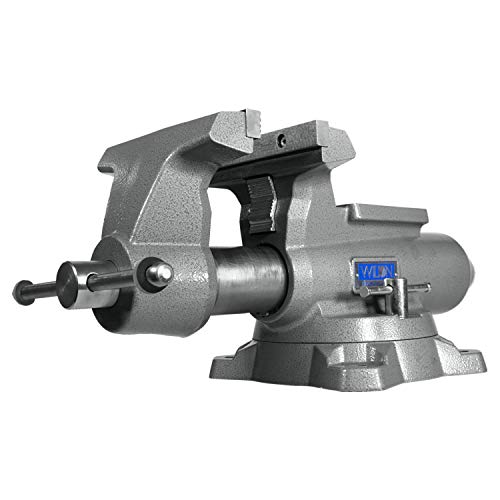
Do not assume a wide opening means deep support. The 11-Inch Front-Mounted Woodworking Vise emphasizes an expansive opening, while several Wilton Mechanics Pro Bench Vise models balance substantial openings with deeper throats for general shop work.
Measure your most demanding project before shopping, then leave clearance for your hands and tools. If you regularly clamp pieces near their center, prioritize throat depth; if you handle broad stock, prioritize opening and jaw width.
3. Evaluate Construction and Load Handling
Material choice influences durability, vibration resistance, and how confidently you can apply force. Ductile iron, gray iron, hardened steel, cast aluminum, and machined aluminum each offer different balances of strength, mass, corrosion resistance, and portability.
Wilton models list 60,000 psi ductile iron movable jaws and bases, making them oriented toward demanding shop use. The SEDY Heavy Duty Bench Vise uses gray iron, while the WORK IQ TOOLS IQ Vise 360° Articulating Bench combines hardened steel with cast aluminum.
For striking, bending, or stubborn fasteners, mass can help resist movement. For a woodworking bench or lighter installation, a lower-weight aluminum body may be easier to mount, provided the work does not require repeated impact loading.
4. Prioritize Jaw Alignment and Slide Control
Precision depends on the movable jaw traveling squarely instead of rocking, twisting, or drifting as pressure increases. A vise can have impressive dimensions yet perform poorly if the slide has excessive play or the jaws close unevenly.
Look for precision-machined guide surfaces, rigid slide bars, and descriptions addressing front-jaw movement. The Wilton Mechanics Pro Bench Vise range specifically lists a precision-machined slide bar designed to limit movement across the opening range.
When comparing listings, treat alignment language as more valuable than vague claims about being heavy duty. For delicate fitting, check that the jaws close parallel; for rough fabrication, modest movement may matter less than overall rigidity.
5. Understand the Base and Swivel Mechanism
A fixed base maximizes direct support, while a swivel base lets you reposition work without repeatedly unclamping it. That flexibility is valuable when drilling several faces, filing angled edges, or switching between operations.
Compare the rotation range, locking method, and number of lockdown points. The Wilton models offer 360-degree swiveling with double lockdowns, while the SEDY design lists a 240-degree swivel base, giving useful adjustment at a smaller footprint.
Use the base only when it locks firmly, because rotation is helpful only if the vise becomes stable afterward. Position the mounting bolts as widely as your bench allows, especially when applying force from the side.
6. Choose the Right Clamping and Jaw Surfaces
Jaw texture and replaceable covers determine how securely a vise grips without marking the material. Serrated steel suits rough metal, while smooth, padded, or replaceable surfaces are safer for finished wood, painted parts, and soft materials.
The SEDY includes thermoplastic polyurethane magnetic jaw covers with a diamond pattern, offering added protection and grip. WORK IQ TOOLS uses smooth parallel jaws with dual-sided Flex-Fit pads and supports optional jaw configurations for unusual or delicate shapes.
Keep a simple jaw strategy: use bare hardened surfaces for secure metalwork, protective covers for finished parts, and custom soft jaws when shape matters. Never compensate for poor alignment by overtightening, since excess force can distort thin stock.
7. Consider Adjustment Speed and Clamping Effort
The screw, spindle, handle, and bearing arrangement affect how quickly you can move between projects and how much effort is needed for final tightening. Smooth operation becomes especially important when a job requires frequent repositioning.
Several Wilton models list an enclosed spindle, which helps keep lubricant inside while limiting contamination. They also specify a needle roller thrust bearing intended to deliver strong clamping force with less operator effort.
For speed and multi-angle work, WORK IQ TOOLS uses a 360-degree articulating ball-and-socket system with a one-hand Quick Cam lever. A traditional screw vise may take longer to reposition, but it can provide familiar, progressive pressure for careful fitting.
8. Verify Mounting Requirements and Bench Fit
Even a strong vise cannot perform accurately when mounted to a flexible or undersized surface. Before purchase, measure bench thickness, available bolt spacing, edge clearance, and the area needed for the handle to rotate freely.
The front-mounted woodworking design lists mounting dimensions and includes fixing hardware, hole openers, and wrenches. A conventional shop vise may require a stronger permanent installation, particularly when its mass and clamping force encourage heavier work.
Use through-bolts and large washers whenever the bench permits, rather than relying on thin screws alone. A practical test is to push sideways against the closed jaws after installation; the bench, base, and fasteners should remain motionless.
| Work priority | Specifications to favor | Potential trade-off |
|---|---|---|
| Detailed metal repairs | Accurate slide, protective jaws, smooth spindle | May sacrifice some impact capacity |
| Heavy fabrication | Ductile or gray iron, deep throat, rigid base | Requires a stronger bench |
| Woodworking | Wide opening, front mounting, smooth jaws | Less suitable for hard impacts |
| Multi-angle projects | Articulating body or secure swivel base | More mechanisms require careful locking |
| Limited workspace | Compact footprint and accessible handle | Lower capacity for oversized stock |
9. Account for Accessories and Specialized Features
Accessories can change how useful a vise becomes for specific tasks, but they should support the core design rather than distract from it. Check whether jaw pads, mounting hardware, replaceable inserts, or accessory ports are included or sold separately.
WORK IQ TOOLS includes four integrated ports for compatible lighting, magnification, and phone-holder accessories, although those accessories are separate. The SEDY includes magnetic jaw protection, while the woodworking vise lists installation tools in its package contents.
Choose accessories based on a repeated need, such as protecting finished surfaces or improving visibility during small repairs. If you only need a sturdy clamp, prioritize alignment and mounting before buying an elaborate accessory ecosystem.
10. Compare Warranty and Long-Term Support
A warranty does not replace good construction, but it can reduce uncertainty when a mechanism develops a manufacturing problem. Read the coverage terms, exclusions, replacement process, and whether the promise applies to normal workshop use.
Wilton states that its Mechanics Pro Bench Vise models include a lifetime warranty against manufacturing defects. The 11-Inch Front-Mounted Woodworking Vise lists a two-year replacement promise for malfunctions under normal use.
Keep installation instructions and purchase records, and avoid modifications that could complicate a claim. For additional household equipment guidance, our smart luggage buying guide demonstrates the same focus on capacity, construction, and practical use.
Why You Should Trust Us
We built this comparison from the specifications and feature information supplied for each listed product, rather than claiming hands-on workshop testing. Our review process separates measurable details, such as jaw dimensions and rotation ranges, from broad marketing language.
We shortlisted products across several use cases, including heavy metalwork, woodworking, general repairs, compact benches, and multi-angle projects. Construction materials, jaw movement, base design, spindle features, included protection, and mounting information shaped the buying guidance.
We also compare products across different capability tiers instead of treating one size as suitable for every reader. Product availability and specifications can change, so we recommend checking the current listing details before ordering through the comparison above.
Final Thoughts
Our best overall recommendation is the WORK IQ TOOLS IQ Vise 360° Articulating Bench because its articulating design solves a common precision problem: repositioning work without losing the setup. Its smooth five-inch jaws, quick locking lever, and fixed working positions make it especially versatile.
For value-focused shoppers, the Heavy Duty Bench Vise 4.5 Inch stands out for its multi-jaw approach, swivel base, and included magnetic protective pads. It is a sensible fit for home workshops that need general clamping without committing to a larger industrial-style installation.
For woodworking, choose the 11-Inch Front-Mounted Woodworking Vise because its broad opening, front-mount format, and machined aluminum guide structure align with workbench projects. Its lighter body may also appeal when installation weight matters more than impact resistance.
For demanding general shop work, the Wilton Mechanics Pro Bench Vise offers the largest jaw format in this group, ductile iron construction, a 360-degree base, enclosed spindle, and thrust bearing. Consider the smaller Wilton formats when your bench or projects do not justify that scale, and browse the Uncategorized product guides for more comparisons.
FAQs
What is the top-rated option among Best Bench Vises for Precision Work in 2026?
The WORK IQ TOOLS IQ Vise 360° Articulating Bench is the strongest all-around choice when flexible positioning matters. Its articulating mechanism, quick lever, and smooth jaws support varied repair and fabrication tasks.
Are larger bench vises always more accurate?
No, size alone does not guarantee accuracy. Guide quality, jaw alignment, base rigidity, and correct installation usually matter more than selecting the heaviest available model.
What size vise is suitable for a home workshop?
A compact four-and-a-half-inch vise can handle many repairs, hobby tasks, and moderate woodworking jobs. Choose a larger model when you routinely clamp thick stock, apply impact, or need deeper support.
Can a bench vise hold wood without damaging it?
Yes, but use smooth jaws, removable pads, or soft jaw covers for finished surfaces. Tighten only until the material is secure, because excessive force can crush fibers or leave visible impressions.
Is a swivel base useful for precision projects?
A swivel base is useful when you frequently work on different faces or angles of one part. It saves repositioning time, provided the locking mechanism holds firmly before force is applied.
What does throat depth mean on a bench vise?
Throat depth is the usable distance from the top of the jaws toward the vise body. Greater depth can support larger workpieces farther below the clamping point.
Why does jaw opening matter?
Jaw opening determines the maximum thickness the vise can accept between its jaws. Compare it with the thickest material you expect to clamp, while remembering that opening and throat depth solve different problems.
How should I mount a bench vise?
Mount the vise to a rigid bench using appropriately sized bolts, washers, and accessible mounting holes. Leave enough clearance for the handle, swivel movement, and tools used around the jaws.
Is cast aluminum strong enough for woodworking?
Cast aluminum can work well for woodworking when the vise is properly supported and used within its intended limits. It offers lower weight, but heavy striking and forceful metal fabrication may favor iron or steel construction.
What makes an articulating vise different?
An articulating vise can rotate, tilt, and swivel the workpiece through multiple positions without requiring a conventional base adjustment. This is convenient for detailed repairs, though every locking point must be secured before work begins.



