
After an ankle fracture, ordinary footwear can feel restrictive, unstable, or simply impossible to wear comfortably. A recovery shoe or walking boot gives your injured foot more room while helping protect it during daily movement.
We compared 7 options for fit flexibility, support, sole design, closure systems, and practical recovery needs during September 2026. This guide helps you distinguish a lightweight post-op shoe from a rigid fracture boot, especially when swelling or dressings change throughout the day.
Before ordering, follow your clinician’s instructions because the safest footwear depends on fracture location, treatment stage, weight-bearing restrictions, and whether you have a cast. Readers planning broader mobility support can also review our guide to rollator walkers with seats for another way to reduce strain while moving around.



Buying Guide for Best Shoes to Wear After Ankle Fracture
1. Match the Shoe to Your Medical Stage
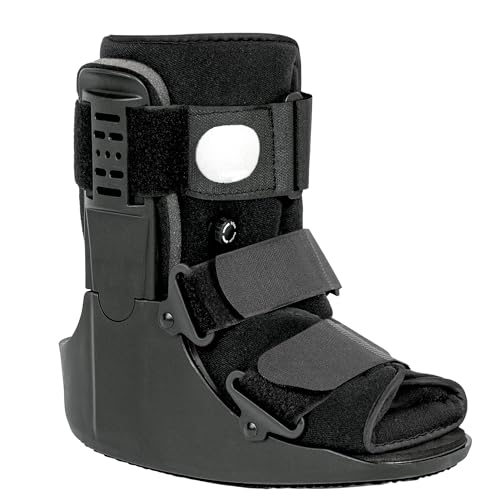
The first decision is whether you need a rigid walking boot, a post-op shoe, or ordinary footwear approved for later rehabilitation. Rigid boots such as the Jewlri Air Walking Boot, Tall Fracture Boot provide more immobilization than flexible recovery shoes.
A boot may suit a fracture or surgical recovery requiring firm control of the foot, ankle, and lower leg. A square-toe post-op shoe is generally more appropriate when your clinician permits walking but you still need room for dressings, swelling, or sensitive toes.
Do not choose based only on appearance or walking comfort. Ask whether your current instructions require immobilization, limited weight bearing, heel offloading, or normal gait practice, then select the least restrictive option that meets those instructions.
2. Get the Length and Width Right
Correct sizing matters because swelling can change the shape of your foot without changing its bone length. Measure the injured foot while wearing the sock or dressing you expect to use, and compare both length and ankle width with the manufacturer’s chart.
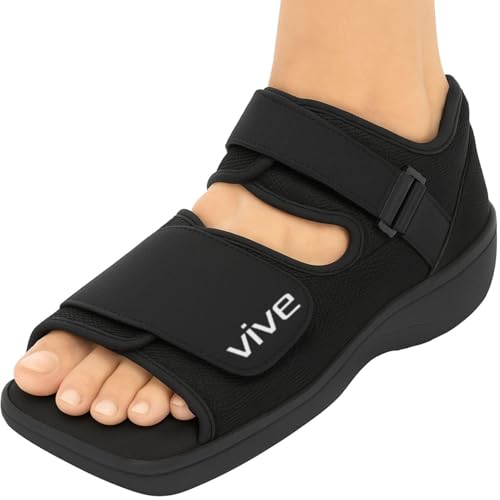
A recovery shoe should leave protective space around the toes without allowing the foot to slide forward. The Vive Wedge Post-Op Shoe specifically recommends extra toe room, while the BraceAbility Closed Toe Medical Walking Shoe uses a square toe box for swelling and bandages.
Never assume your usual shoe size transfers directly to a medical shoe. If you are between sizes, consider dressing thickness, adjustable straps, and your clinician’s advice instead of sizing down to achieve a snug appearance.
3. Choose the Necessary Level of Immobilization
Immobilization limits unwanted movement while the injured structures recover, but excessive restriction can make daily activities harder. A rigid shell generally offers stronger control than a soft post-op shoe, particularly around the ankle and lower leg.
The Jewlri Walking Boot for Broken & Injured Foot uses a hard plastic frame, padded lining, hook and loop fasteners, and inflatable compartments. The taller Jewlri Air Walking Boot, Tall Fracture Boot extends farther up the calf for injuries needing additional coverage.
Compare shell height, ankle coverage, liner thickness, and closure adjustability rather than relying on the word boot. Use a shorter or lighter design only when your treatment plan allows more movement and does not require firm lower-leg support.
4. Evaluate the Sole and Walking Pattern
The sole affects balance, traction, and how naturally you can move from heel to toe. Rigid rocker soles can reduce bending through the injured foot, while textured non-skid bases help limit slips on common indoor and outdoor surfaces.
The Vive Post Op Shoe – Lightweight Medical Walking includes a rigid rocker sole intended to support the arch and reduce forefoot pressure. BraceAbility’s closed-toe design also uses a rocker sole, while the Vive Wedge Post-Op Shoe shifts impact toward the toes and midfoot.
Check whether the sole feels stable when standing, turning, and stepping over thresholds. A tread pattern is useful, but it cannot compensate for a boot that is too loose, too tall, or mismatched with your weight-bearing instructions.
5. Consider Swelling and Dressing Space
Swelling commonly changes during the day, so a shoe that fits in the morning may feel tight later. Wide openings, adjustable straps, extender tabs, and removable liners make it easier to accommodate changing foot volume.
The Vive Wedge Post-Op Shoe includes extender tabs and adjusts over socks, bandages, or wound dressings. Vive Post Op Shoe – Lightweight Medical Walking has two adjustable straps and a square toe that protects the front of the foot.
Leave enough room for the actual dressing, not merely a thin sock. If swelling produces numbness, color changes, increasing pain, or pressure marks, remove the shoe when safe and contact your healthcare professional.
6. Compare Closure Systems and Adjustability
Adjustable closures let you create a secure fit without forcing a swollen foot into a fixed opening. Hook and loop straps are usually easier to modify than laces when mobility is limited or one hand must do most of the work.
Tall boots may use several straps around the foot, ankle, and calf, spreading pressure across a larger area. Post-op shoes often use fewer straps, which can be sufficient for protection but may offer less precise control around the lower leg.
Fasten each closure firmly enough to prevent sliding, then check circulation and comfort after several minutes. The best adjustment is secure without creating concentrated pressure over the fracture, incision, swelling, or sensitive skin.
7. Look for Cushioning Without Losing Stability
Cushioning can make necessary walking less uncomfortable, especially on hard flooring. However, a soft insole does not replace the structural support needed to control an injured ankle or protect a healing fracture.
The Jewlri walking boots include soft, thick insoles designed for shock absorption, and the liners can be removed for washing. That combination can be useful when you expect extended wear, provided the boot still fits securely after the liner is installed.
Compare removable padding, liner thickness, arch feel, and pressure distribution. A practical test is to stand for several minutes and identify whether discomfort comes from impact, rubbing, compression, or instability, because each problem requires a different solution.
8. Prioritize Protection and Toe Clearance
A protective toe area shields vulnerable toes and dressings from furniture, doorways, and accidental contact. It also creates useful space when swelling makes a conventional pointed shoe unsafe or uncomfortable.
The BraceAbility Closed Toe Medical Walking Shoe covers the front of the foot and helps keep dressings dry and clean. Its spacious square toe box supports socks, swelling, and certain casts without compressing the toes.
Toe clearance should be generous but not so excessive that your foot moves inside the shoe. Check that the front bumper, straps, and sole protect the foot without pressing directly against painful areas.
9. Check Weight, Height, and Daily Practicality
Medical footwear can feel tiring when worn for many hours, particularly if you are already compensating for an injured leg. Lightweight post-op shoes are easier to manage, while taller rigid boots may provide more control at the cost of bulk.
Think about stairs, car entry, household floors, and the amount of time you spend standing. A tall boot may be sensible for serious support, but it can be awkward in tight spaces and may require a gradual adjustment period.
Choose practicality only after medical suitability. If a clinician recommends a tall fracture boot, convenience should influence fit and closure preferences rather than persuade you to use a less supportive design.
| Feature | Post-op shoe | Rigid walking boot | Best comparison question |
|---|---|---|---|
| Protection | Moderate | High | How much movement must be limited? |
| Toe space | Usually generous | Depends on liner | Will dressings or swelling fit safely? |
| Mobility | Lighter and easier | More restrictive | What movement is medically allowed? |
| Adjustability | Straps or tabs | Multiple straps and padding | Can the fit change during swelling? |
Those differences explain why there is no single recovery shoe for every ankle fracture. Readers comparing home mobility aids may also find our Furniture & Comfort category useful when planning a safer recovery environment.
Why You Should Trust Us
We built this comparison from the supplied product specifications, listed features, sizing guidance, brand information, and stated use cases. We focused on measurable differences such as shell construction, sole style, toe protection, closure design, liner materials, and left or right foot compatibility.
Our shortlist includes products across lightweight post-op shoes and more structured fracture boots, allowing readers to compare support levels instead of treating every item as interchangeable. We did not claim hands-on testing, clinical validation, or personal medical outcomes that the available data does not support.
Because product details and availability can change, the comparison should be read alongside the current listing and your healthcare professional’s guidance. We keep the recommendations transparent by connecting each conclusion to a stated feature and a specific recovery need.
Final Thoughts on Best Shoes to Wear After Ankle Fracture
Our best overall choice is the Jewlri Walking Boot for Broken & Injured Foot because it combines a rigid protective frame, adjustable closures, a padded removable liner, and inflatable comfort compartments. It suits readers who need substantial support while still wanting fit adjustments as swelling changes.
For value and everyday simplicity, we recommend Vive Post Op Shoe – Lightweight Medical Walking. Its square toe, two adjustable straps, rocker sole, and non-skid tread create a practical option when your clinician permits walking but you still need protection around dressings or sensitive toes.
For heel pressure concerns, the Vive Wedge Post-Op Shoe is the specific-use pick. Its wedge design shifts impact toward the toes and midfoot, while the open toe area, extender tabs, and lightweight base support a more adaptable fit.
Readers needing stronger calf and ankle coverage should consider the Jewlri Air Walking Boot, Tall Fracture Boot, while the BraceAbility Closed Toe Medical Walking Shoe suits people prioritizing closed-toe protection and dressing coverage. For additional health-related buying guidance, visit the Health & Family category.
FAQs About Best Shoes to Wear After Ankle Fracture
Can I wear regular shoes after an ankle fracture?
Regular shoes may be appropriate only after your clinician confirms that your healing stage allows them. Swelling, reduced mobility, and tenderness often make adjustable medical footwear safer and more comfortable during earlier recovery.
Are walking boots safe for every ankle fracture?
No, the correct device depends on the fracture, treatment, alignment, and weight-bearing instructions. A walking boot should be selected with professional guidance rather than used as a substitute for diagnosis or follow-up care.
Should a recovery shoe feel tight?
It should feel secure without squeezing the foot or causing numbness, discoloration, or increasing pain. Adjustable straps should hold the foot in place while leaving safe room for socks, dressings, and normal swelling.
Which footwear is easiest to put on with limited mobility?
Post-op shoes and boots with hook and loop closures are usually easier than lace-up footwear. Multiple wide straps can also help you adjust the fit while seated and avoid excessive bending.
Can I sleep in an ankle fracture boot?
Follow your clinician’s exact instructions because sleep recommendations differ by injury and treatment. Do not remove prescribed immobilization simply because the boot feels inconvenient overnight.
How should I measure for a fracture boot?
Measure the injured foot and ankle according to the product’s sizing directions, accounting for the sock, cast, or dressing used during recovery. Compare those measurements with the current chart instead of relying only on your usual footwear size.
What is the top-rated option among Best Shoes to Wear After Ankle Fracture in 2026?
The listed options with strong stated ratings include several Vive, BraceAbility, and Jewlri models, but a rating cannot determine medical suitability. Match support, coverage, and fit to your treatment plan before considering popularity.
Do fracture boots help with swelling?
Adjustable boots can accommodate some swelling, especially when they include padding or flexible closure systems. They do not treat swelling itself, so follow elevation, medication, and activity instructions provided by your healthcare professional.
Can I drive while wearing an ankle fracture boot?
Driving may be unsafe or restricted when a boot affects pedal control, reaction time, or weight bearing. Ask your clinician and check local rules and insurance requirements before driving.
How do I keep a medical walking shoe clean?
Use the manufacturer’s care directions and avoid soaking materials that contain rigid components or non-removable padding. Removable liners can often be washed separately, then dried completely before reinsertion.