

Homes with driveways, entrances, patios, and detached buildings need surveillance that stays ready whenever movement occurs. Wired outdoor cameras are especially useful because continuous power supports dependable monitoring, stronger features, and fewer interruptions than battery-powered alternatives.
We compared 7 models across affordable Wi-Fi cameras, hardwired floodlight cameras, single PoE units, and complete recording systems. This guide helps you separate useful specifications from marketing language, avoid unsuitable installations, and match a camera to your property.
Current buyers must weigh more than resolution alone. Person detection, night illumination, local recording, network requirements, privacy settings, and weather protection can affect everyday satisfaction more than an impressive pixel number. For broader household buying advice, visit our Home & Living category guides.




Best Wired Outdoor Home Security Cameras Buying Guide
1. Power and Installation Requirements
Start by identifying how electricity and network data will reach the camera location. Corded Wi-Fi models need an outdoor-rated power connection, while PoE cameras can receive power and data through one Ethernet cable.
A standard wired camera is usually simpler when an exterior outlet already exists nearby. PoE systems are more structured, but they may require an NVR, PoE switch, injector, or a cable run through walls and attic spaces.
Before buying, measure the route, identify the outlet or network equipment, and verify whether the installation surface can support the mounting hardware. Never rely on an indoor extension cord for permanent outdoor surveillance, particularly where rain or condensation is possible.
2. Video Resolution and Coverage
Resolution determines how much visual detail the camera records, but the useful result also depends on lens quality, lighting, compression, and viewing distance. A 1080p model can suit a doorway, while 2K or 4K makes more sense across a wide driveway.
Think about the detail you actually need. General awareness requires recognizing movement, while identifying faces, license plates, or packages requires more pixels on the subject and a carefully chosen mounting angle.
Do not judge a camera solely by its maximum resolution. Higher-resolution recording consumes more storage and bandwidth, so confirm that your router, NVR, memory card, and internet connection can handle the selected setting.
| Property need | Useful camera approach | Main trade-off |
|---|---|---|
| Door or porch | 1080p or 2K Wi-Fi camera | Simple installation, narrower detail range |
| Driveway | 2K or higher with wide coverage | More storage and network demand |
| Large yard | Panoramic, dual-lens, or multiple cameras | Higher equipment and setup complexity |
| Commercial property | PoE cameras with an NVR | More planning, stronger recording control |
3. Field of View and Camera Placement
Field of view describes how much of the scene appears in one frame. A wide lens can cover more ground, but extreme wide-angle views may make distant faces and objects appear smaller.
Pan and tilt models add flexibility because you can redirect the lens through an app. Motion tracking can follow a person, although a moving lens may leave another area temporarily uncovered during the same event.
Mount cameras high enough to discourage tampering, but not so high that faces become indistinct. Aim entrances across the walking path rather than directly toward harsh sunlight, reflective surfaces, or a busy street.
4. Night Vision and Outdoor Lighting
Night performance often determines whether footage is useful after dark. Infrared vision can show monochrome detail, while spotlights or floodlights can provide color footage and discourage activity.
Check the stated night-vision distance against your actual property. A long range is helpful only when the lens remains focused, the scene is unobstructed, and nearby lighting does not create glare or washed-out faces.
Floodlights are valuable around driveways and side yards, but they may disturb neighbors or family members. Adjustable brightness, motion zones, and schedules let you balance deterrence with comfortable nighttime use.
5. Motion Detection and Smart Alerts
Basic motion alerts can become overwhelming when trees, shadows, pets, and passing vehicles trigger notifications. Person, vehicle, and animal detection helps filter ordinary movement from events that deserve attention.
Look for customizable activity zones and sensitivity controls. A driveway camera might monitor the driveway while excluding a sidewalk, road, or neighbor’s property to reduce unnecessary notifications.
Smart detection is not perfect, so treat it as an assistance feature rather than proof of identity. Test notification timing, adjust zones after installation, and choose a camera that allows alerts to be muted during predictable activity.
6. Storage, Recording, and Subscription Policies
Decide whether you prefer cloud storage, local microSD storage, an NVR, or a combination. Cloud services make remote access convenient, while local storage can reduce recurring dependence on a provider.
Continuous recording needs substantially more capacity than motion-only clips. If a camera records around the clock, estimate storage from resolution, frame rate, compression, and the number of cameras before choosing a memory card or hard drive.
Review what remains available without a subscription. Some cameras provide live viewing and local clips at no recurring cost, while advanced history, artificial intelligence, or extended retention may require a paid plan.
7. Weather Resistance and Durability
An outdoor camera must tolerate rain, dust, temperature swings, and occasional moisture around connectors. IP ratings provide a useful comparison, with the first digit addressing solids and the second addressing water resistance.
IP65 and IP66 ratings are common for outdoor equipment, but the rating does not make every installation automatically weatherproof. Cable openings, power adapters, wall penetrations, and mounting joints still need appropriate protection.
Compare the operating temperature range with your local climate, including direct sun on dark housings. Install the camera under an eave when practical, and create a drip loop so water does not run directly toward a connector.
8. Connectivity, App Quality, and Compatibility
Wi-Fi cameras depend on a stable signal at the mounting location, not merely beside the router. Thick walls, metal siding, distance, and competing networks can cause delays or disconnected footage.
PoE reduces wireless uncertainty, but it introduces network planning. Confirm cable categories, switch capacity, NVR compatibility, and whether the camera requires a particular ecosystem or firmware version.
App functions matter because you will use them for live viewing, playback, sharing, zones, and notifications. Compatibility with Alexa or Google Assistant can be convenient, but voice display support should not replace careful privacy and account security review.
For related connected-home purchasing guidance, our guide to choosing practical connected lifestyle products illustrates why compatibility and daily usability deserve attention alongside specifications.
9. Two-Way Audio, Sirens, and Privacy
Two-way audio lets you speak with visitors, delivery drivers, or family members without opening the door. Microphone placement, speaker volume, and connection delay affect whether conversations remain understandable outside.
Built-in sirens and lights can deter unwanted activity, particularly when triggered manually or by a configured event. Use them thoughtfully, because false alarms can disturb your household and reduce trust in the system.
Privacy deserves equal consideration. Choose sensible viewing angles, enable account protections, update firmware, and avoid recording areas where neighbors reasonably expect privacy.
10. System Expansion and Long-Term Value
A single camera may solve one blind spot, but many homes eventually need coverage at several entrances. Check whether the app, NVR, storage plan, and network can support additional cameras later.
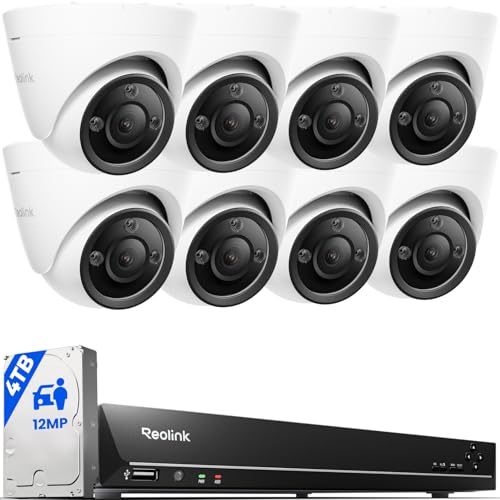
Complete PoE systems can be attractive for larger properties because cameras and recording are designed together. The REOLINK 16CH 12MP PoE Security Camera System is oriented toward broad coverage, while a compact Wi-Fi model is easier for one location.
Calculate value using installation effort, storage, subscriptions, replacement accessories, and expandability rather than the purchase figure alone. A modest camera that stays connected and records reliably can outperform a feature-rich model that your network cannot support.
Why You Should Trust Us
We built this comparison from the supplied product specifications, stated features, connectivity requirements, protection ratings, recording options, and intended use cases. We also considered how each design fits different property sizes, installation situations, and monitoring habits.
Our shortlist includes corded Wi-Fi cameras, floodlight models, dual-lens panoramic coverage, and PoE systems with dedicated recording hardware. That range prevents one specification, such as resolution, from deciding every recommendation for every household.
We do not claim to have physically installed or tested these products. Instead, we compare verifiable information and present trade-offs transparently, while dynamic product details can remain current as listings and availability change.
Final Thoughts
Our best overall choice is REOLINK Duo 3 PoE Dual-Lens PoE Security Camera for properties needing broad coverage from one position. Its dual-lens design, 180-degree panoramic view, 16MP imaging, smart detection, and PoE connection address coverage, detail, and reliability together.
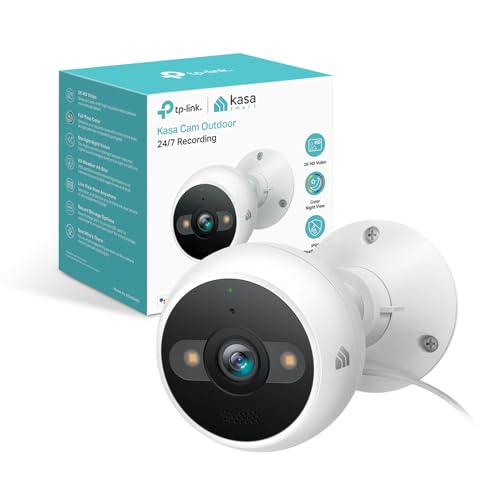
For everyday value, consider Kasa 2K+ Outdoor Wired Security Camera, KC420WS. Its 2K video, starlight sensor, color night vision, activity notifications, two-way audio, and siren create a balanced option when you already have suitable outdoor power and Wi-Fi.
For a high-traffic entrance or driveway where lighting and deterrence matter, Ring Floodlight Cam Wired stands out with motion-activated floodlights, adjustable zones, HD video, a siren, and Alexa integration.
Large homes and businesses may prefer REOLINK 16CH 12MP PoE Security Camera System because its NVR architecture supports extensive coverage and continuous recording. Before choosing it, plan cable routes, storage needs, and the technical space required for a larger surveillance system.
Readers comparing broader home equipment can also explore our practical guide to choosing durable travel gear, where long-term usability receives the same attention as headline features.
FAQs
Are wired outdoor cameras more reliable than wireless cameras?
Wired models avoid battery depletion and can provide consistent power for continuous monitoring. Wi-Fi cameras still depend on wireless signal quality, while PoE models reduce both power and data cabling complexity.
Do wired security cameras need internet access?
Internet access is usually needed for remote viewing, cloud storage, and smartphone notifications. Some local NVR systems can continue recording on the home network during an internet outage.
What does PoE mean for an outdoor security camera?
PoE means Power over Ethernet, allowing one Ethernet cable to carry both electrical power and network data. You must still provide compatible equipment such as a PoE NVR, switch, or injector.
Is 1080p enough for outdoor home surveillance?
1080p can be sufficient for nearby doors, porches, and general activity awareness. Choose higher resolution when the camera must cover a wide driveway or preserve distant identifying details.
Can outdoor cameras record continuously?
Many wired and PoE cameras support continuous recording when paired with suitable local storage or an NVR. Confirm storage capacity, overwrite behavior, and whether the cloud service supports nonstop recording.
How far should an outdoor camera be mounted from a doorway?
Mounting distance depends on the lens and the desired viewing angle, but the camera should capture faces without pointing steeply downward. Test the live view before permanently tightening the mount.
Are IP65 and IP66 ratings suitable for outdoor cameras?
Both ratings generally indicate useful protection against outdoor dust and water exposure. They do not replace careful sealing of cable connections, power supplies, and holes drilled through exterior walls.
Do security camera subscriptions have to be paid?
Not always, because some products support local microSD cards or NVR recording without monthly storage fees. Paid plans may add longer history, advanced detection, or convenient cloud access.
What is the top-rated option among Best Wired Outdoor Home Security Cameras in 2026?
The strongest option depends on your installation and coverage requirements rather than one universal rating. REOLINK Duo 3 PoE Dual-Lens PoE Security Camera suits wide views, while a compact Wi-Fi camera may better fit a single entrance.
Can a wired camera work during a power outage?
A normal wired camera stops when its power source fails unless the outlet or network equipment uses a battery backup. For critical coverage, consider an uninterruptible power supply for the router, NVR, switch, and camera circuit.



